



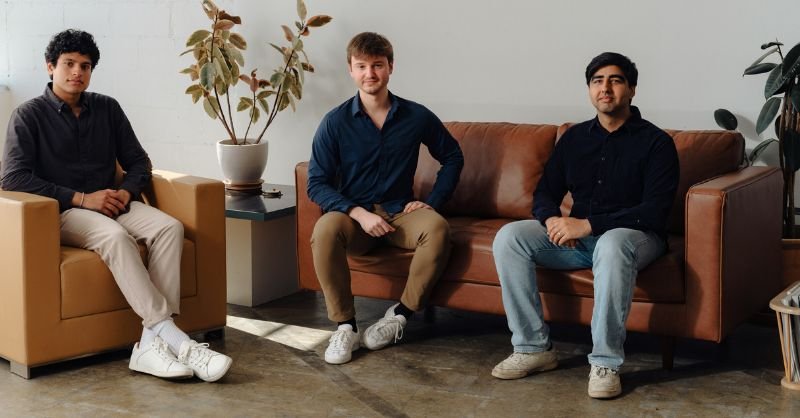
In a stunning development from Silicon Valley, a new wave of ultra-young entrepreneurs has rewritten the ranks of the world’s self-made billionaires. With the meteoric rise of Mercor – a rapidly growing recruitment tech startup at the epicentre of artificial intelligence (AI) model training – the title of world’s youngest self-made billionaire, once held by Meta’s Mark Zuckerberg, now belongs to not one, but three cofounders: Brendan Foody, Adarsh Hiremath, and Surya Midha, all just 22 years old.
Record-Breaking Funding and Valuation
Mercor’s journey to a $10 billion valuation is as astonishing as the youth of its founders. This week, the San Francisco-based company secured an eye-watering $350 million funding round led by investment giant Felicis Ventures. The investment consortium included some of the most storied venture capital firms in the industry, among them Benchmark, General Catalyst, and Robinhood. Reports indicate that each cofounder now owns roughly 22% of the company—a stake that instantly catapulted all three into the ranks of billionaires overnight.
Meet the Billionaire Trio
While Silicon Valley is no stranger to standout prodigies, the story of Mercor’s founders still stands apart. CEO Brendan Foody, CTO Adarsh Hiremath, and Board Chairman Surya Midha all crossed paths as high school debate teammates in the San Francisco Bay Area. Foody and Midha are Indian-origin Americans, bringing much-deserved visibility and pride to the Indian diaspora in global technology leadership.
All three are alumni of the prestigious Thiel Fellowship, a program launched by PayPal cofounder Peter Thiel that awards $100,000 grants to young innovators willing to skip or forgo college to chase entrepreneurial ambitions. The fellowship has become a beacon for a generation of tech founders eager to make their mark—and Mercor’s success is a testament to the effectiveness of this bold educational experiment.
From College Dropouts to Tech Icons
The individual journeys of the Mercor founders are no less inspiring for their audacious timelines. Hiremath left Harvard after his sophomore year—meaning, had he completed his degree, he would have just graduated this year. Instead, he stands today as one of the youngest billionaires in history. “Everything changed so fast,” Hiremath reflected, underscoring the surreal nature of their ascent.
Foody echoed this sentiment, noting that the magnitudes involved were beyond anything they could have imagined even two years ago. Thrust into media limelight and industry scrutiny, the trio now find themselves as the torchbearers for a new generation of AI-powered ambition.
Mercor’s Disruptive Business Model
Founded just two years ago in 2023, Mercor’s initial mission was to bridge the gap between India’s vast pool of software engineering talent and the needs of U.S. tech companies eager to hire skilled freelancers. The innovative platform allowed candidates to interview via AI avatars, giving tech firms a unique edge in finding, screening, and deploying global talent based on precise skill alignment.
But as Mercor grew, it discovered an even more lucrative opportunity: the surging demand for high-quality data labeling needed by elite AI research labs—including powerhouses like OpenAI. Mercor began matching highly specialized contractors, from PhDs to legal experts, to sophisticated data annotation projects, further solidifying the company’s position at the heart of the AI revolution.
Outpacing the Icons: The Youngest Billionaires
Mercor’s stratospheric rise has unsettled a leaderboard long dominated by familiar names and faces. Previously, the youngest self-made billionaire distinction was held by Mark Zuckerberg, who crossed the milestone at age 23, following Facebook’s exponential success. Mercor’s Midha is the youngest of the trio, born just two months after his cofounders, marking a precise—and record-breaking—change in the annals of business history.
For added perspective, the previous holders of this title also came from the AI and cryptocurrency sectors, signifying the importance of these high-growth domains. Shayne Coplan, CEO of Polymarket, briefly held the spotlight at 27 after overseeing a $2 billion investment round in his decentralized prediction market platform. Alexandr Wang of Scale AI, now 28, was another recent record-holder, with Lucy Guo, Scale’s cofounder, becoming the youngest self-made woman billionaire at 30.
The only individual to reach billionaire status at a younger age was Kylie Jenner. However, Forbes later revised Jenner’s valuation, citing inflated figures and casting some doubt on her initial ranking.
The Importance of Thiel Fellowships in Shaping the Tech Future
One thread linking the Mercor founders with their peers is the prominence of the Thiel Fellowship, which has emerged as a powerful accelerator for young talent outside the walls of Ivy League universities. Past fellows include founders who have created multi-billion-dollar companies in fintech, biotech, and now, AI workforce solutions. Peter Thiel’s disruptive vision for preemptive entrepreneurship—encouraging teens and early twenty-somethings to learn by building rather than by studying—can be seen as a driving force behind these new tech fortunes.
The AI Generation Emerges
Mercor’s rise is emblematic of a broader shift within the tech industry, where innovation cycles are accelerating and barriers to entry for young, ambitious founders are lower than ever. The company’s singular focus on AI model training and workforce augmentation places it at the crossroads of two massive global trends: the hunger for AI-driven solutions and the vast, still-untapped labor markets in Asia, particularly India.
This new breed of “AI generation” founders are rewriting the rulebook—not only on who can be a billionaire, but on what it takes to build category-defining companies at lightning speed.
Looking Forward
As Mercor scales new heights and its twenty-something leaders adjust to lives of unprecedented wealth and influence, the world will be watching keenly. Their success will inspire not just future generations of entrepreneurs, but also investors, educators, and policymakers pondering how to harness the energies of the digital age for global good.
For now, the message from Silicon Valley is clear: youth, combined with vision, engineering skill, and the audacity to seize fleeting opportunities, can achieve what was once thought unimaginable—even by industry icons like Mark Zuckerberg.


More Stories